It’s Not Just “Something You Have to Live With”: Managing Pelvic Organ Prolapse Together
By Alexis Lee
, Women’s Health Physiotherapist at Plan V
Feeling pelvic heaviness after delivery? Learn how specialized physiotherapy effectively treats Pelvic Organ Prolapse without immediate need for surgery.
Meet Suraya
Suraya, 52, a civil servant and mother of four, arrived at my clinic with a referral slip that read: “POP Stage II — for physio before considering surgery.”
“My doctor says I have a prolapse,” she said. “I don’t really understand what that means. I don’t know what physio can do for this.”
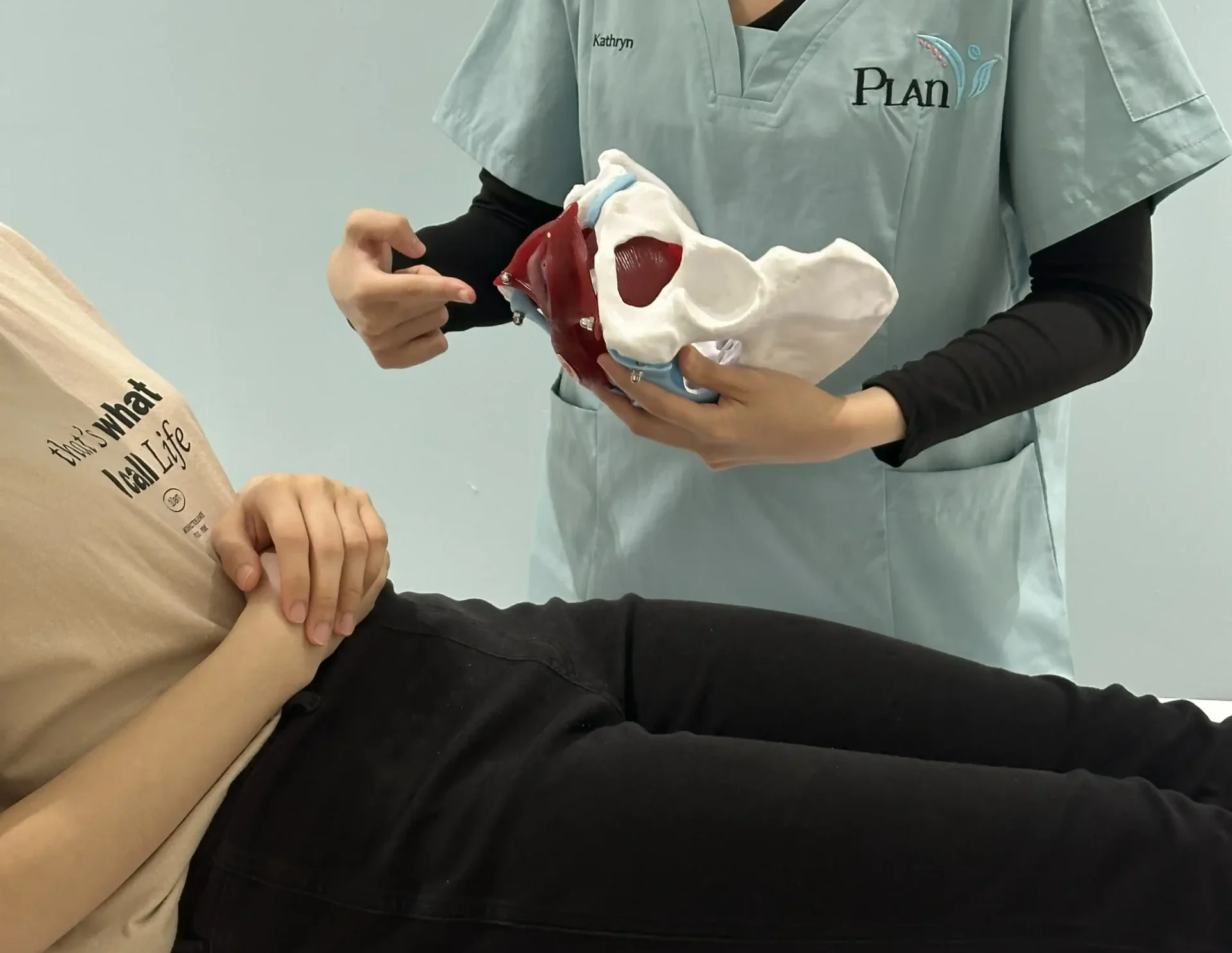
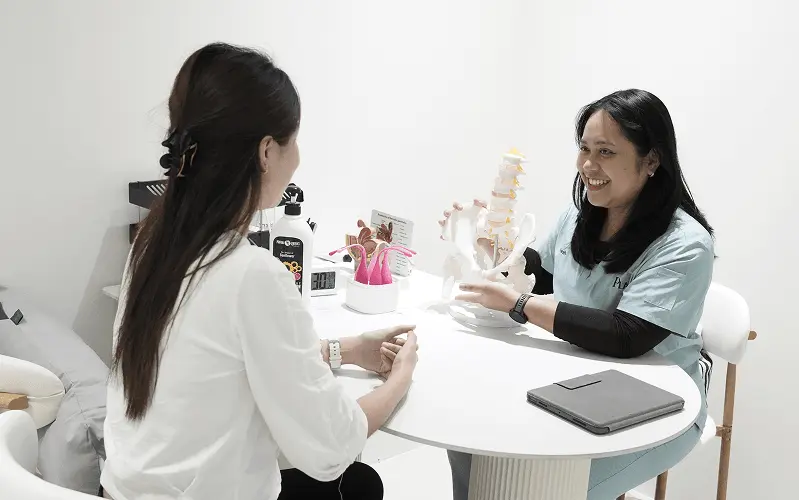
Figure 1: Physiotherapist Explaining Pelvic Organ Prolapse
She had been living with symptoms for two years before disclosing them — and only then because her gynaecologist asked directly during a routine appointment. By that point she had stopped her evening walks, avoided intimacy for eighteen months, and assumed surgery was inevitable. Just a matter of when.
It was not inevitable. And what changed her outcome was not one clinician — it was three working together: her gynaecologist, her physiotherapist, and Suraya herself.
What Is Pelvic Organ Prolapse?
Pelvic organ prolapse (POP) occurs when the bladder, uterus, or rectum descends from its normal position and bulges into or beyond the vaginal wall, due to failure of the pelvic floor muscles, fascia, and ligaments to maintain adequate support(Figure 2).
Figure 1: Types of Pelvic Organ Prolapse
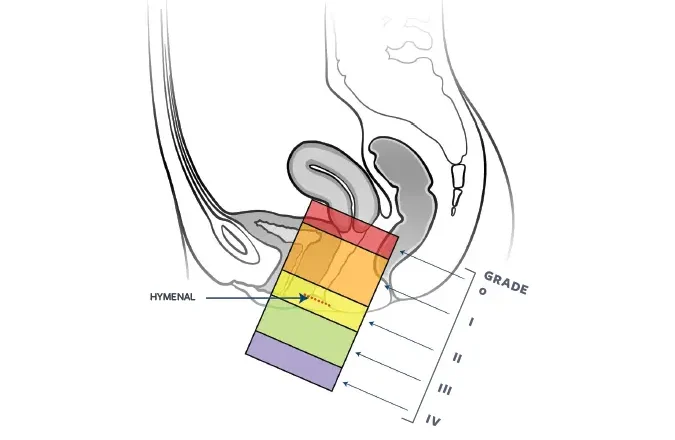
The most common types are a cystocele (bladder into the anterior vaginal wall), rectocele (rectum into the posterior wall), and uterine prolapse. Severity is staged using the POP-Q system from Stage I (minor descent) to Stage IV (complete eversion). Stages I and II are the primary territory of conservative management; Stages III and IV may require surgical consideration, though conservative care remains appropriate and effective for many women even here(Figure 2).
Figure 2: Pelvic Organ Prolapse Stage
Suraya had a Stage II cystocele with mild posterior wall involvement. Her symptoms included a dragging pelvic heaviness worse by afternoon, urgency and urinary leakage, difficulty with defaecation, and a sensation of something descending vaginally after prolonged standing. She had stopped exercising because the heaviness became unbearable after twenty minutes on her feet.
The Three Pillars of Collaborative Management
Effective POP management works best when three participants are genuinely engaged: the gynaecologist, the physiotherapist, and the patient. When any one pillar is absent, outcomes suffer.
Pillar 1 — The Gynaecologist: Diagnosis and Medical Management
The gynaecologist’s role begins with accurate POP-Q staging — providing the objective baseline that guides management decisions and monitors change over time.
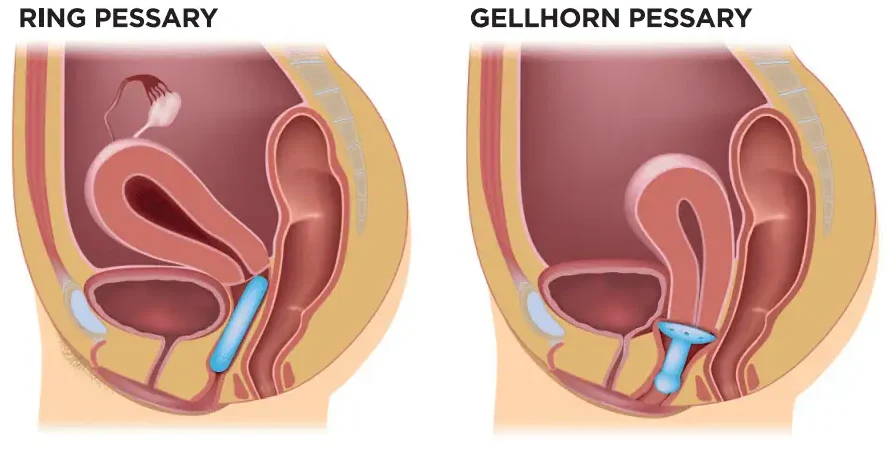
Pessary fitting is the most immediately impactful medical intervention for symptomatic prolapse and remains significantly underutilised in clinical practice. A silicone ring pessary, fitted correctly, mechanically supports the prolapsed tissue and provides immediate symptomatic relief — reducing heaviness, improving bladder and bowel function, and enabling the woman to remain active while rehabilitation is underway(Figure 3). For Suraya, the pessary inserted by her gynaecologist eliminated her walking limitation within days, allowing her to attend physiotherapy without being restricted by pain.
Figure 3: Types of Pessary Ring
Pessaries also serve a diagnostic function: symptom resolution with the device in place confirms that prolapse — rather than a concurrent condition — is the primary driver, informing shared decisions about surgery.
Local oestrogen therapy is a critical adjunct, particularly in perimenopausal and postmenopausal women. Declining oestrogen causes atrophic changes throughout the vaginal and urethral tissues, accelerating prolapse progression and reducing tissue tolerance to pessary use and physiotherapy. Topical vaginal oestrogen, with minimal systemic absorption, improves tissue quality and the connective tissue environment in which rehabilitation takes place. The gynaecologist’s role in initiating and reviewing this is essential.
Surgical decision-making should be explicitly shared, informed by conservative management outcomes, patient symptoms, and personal goals. Surgery is not the default endpoint — for many women, a genuine conservative trial produces durable relief without operative intervention.
Pillar 2 — The Physiotherapist: Rehabilitation and Education
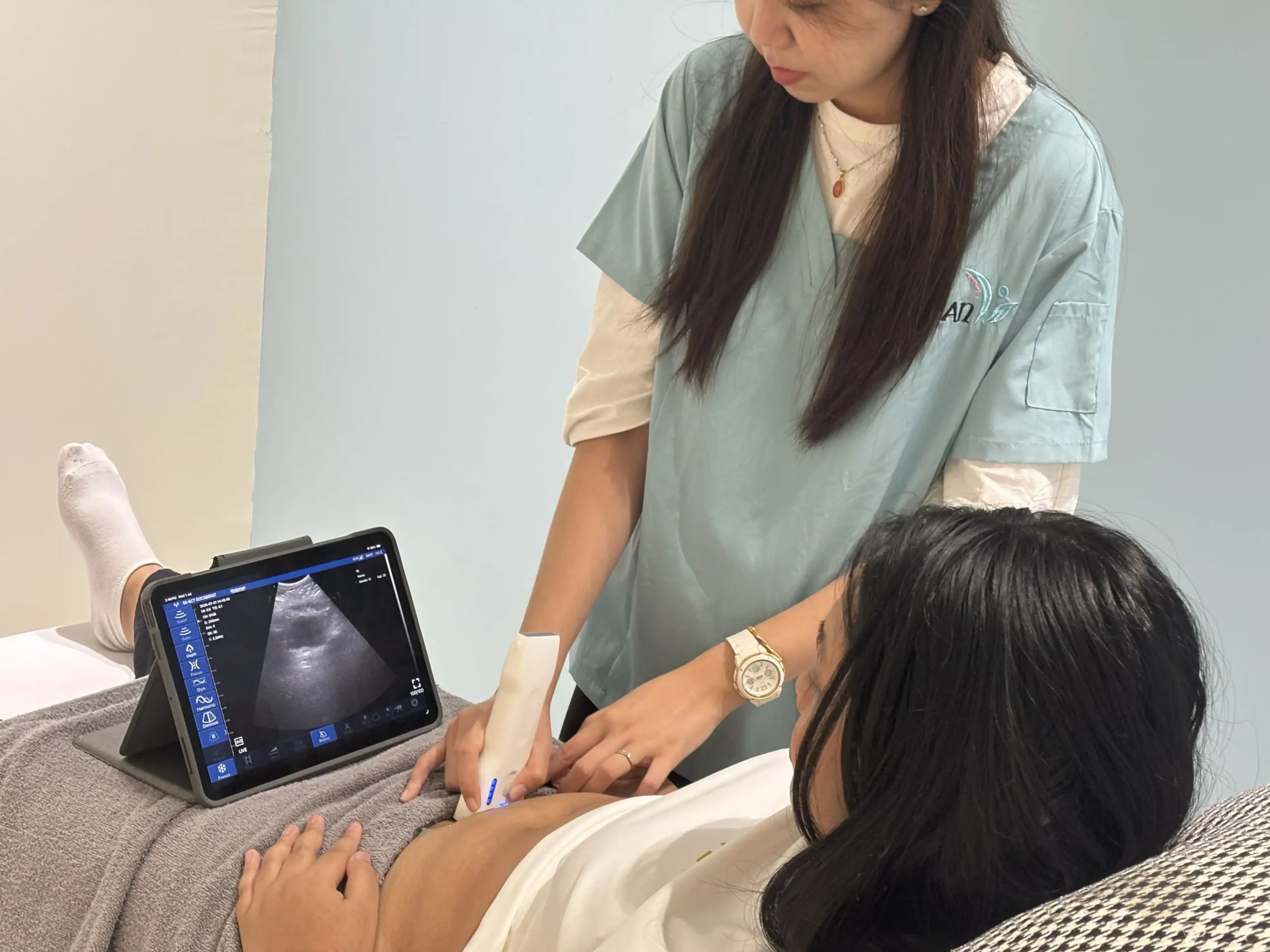
The physiotherapist’s role extends well beyond Kegel exercises. It encompasses individualised assessment, progressive rehabilitation, manual therapy, pressure management education, and preparation for return to activity.
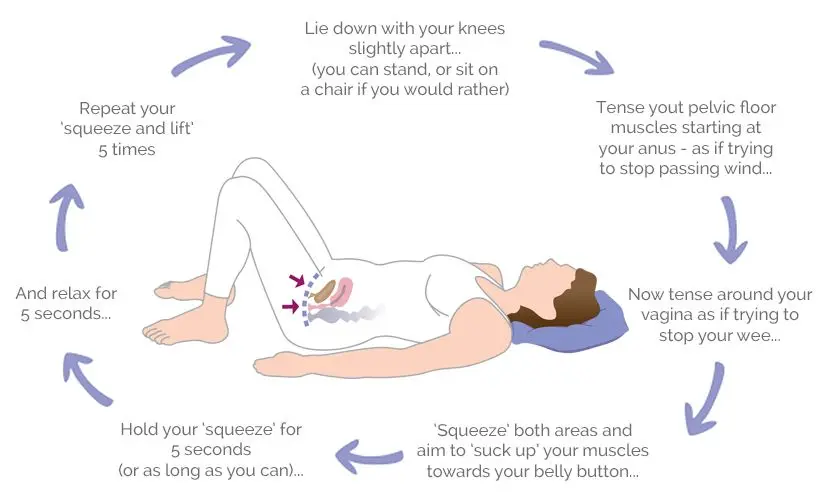
Pelvic Floor Muscle Training (PFMT) is the evidence-based first-line physiotherapy intervention for POP(Figure 4). The Cochrane review (Hagen et al., 2017) found supervised PFMT significantly reduced prolapse symptom severity and improved quality of life. Stronger, better-coordinated pelvic floor muscles provide improved dynamic support to the pelvic organs, reducing symptomatic descent during loading. Critically, assessment must precede prescription — a hypertonic pelvic floor with poor relaxation requires a fundamentally different programme to a hypotonic floor with poor contraction.
Figure 4: Pelvic Floor Muscle Exercise
Suraya presented with Oxford grade 2/5 voluntary contraction, poor endurance, and absent fast-twitch recruitment. Her programme prioritised sustained endurance holds, with progressive loading introduced as strength improved over twelve weeks.
Manual Therapy addresses the myofascial component that exercise alone cannot reach. Many women with chronic prolapse develop levator ani hypertonicity as a protective guarding response — paradoxically worsening function by preventing full muscle relaxation and lengthening. Internal myofascial release techniques, applied vaginally with informed consent, reduce trigger point sensitivity and improve neuromuscular awareness of the pelvic floor. Connective tissue mobilisation of the perineum and posterior vaginal wall improves tissue extensibility and reduces rectocele-related discomfort. External techniques — including thoracolumbar fascial release and hip flexor mobilisation — address the compensatory postural patterns that develop with chronic pelvic heaviness.
The Knack Manoeuvre — a pre-emptive pelvic floor contraction performed immediately before coughing, sneezing, lifting, or any activity raising intra-abdominal pressure — reduces the downward force on the pelvic floor at moments of maximum vulnerability. Teaching this as an automatic response is one of the most practically impactful skills a physiotherapist can provide.
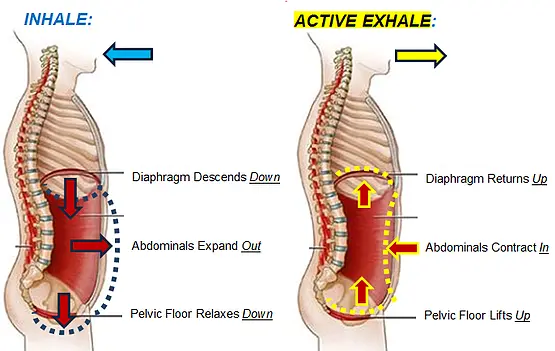
Intra-Abdominal Pressure (IAP) Management is equally critical. Chronic constipation with straining, heavy lifting without pre-contraction, high-impact exercise, and habitual breath-holding during exertion all drive prolapse symptoms downward(Figure 5). Physiotherapy addresses each systematically: defaecation mechanics using a footstool for a more physiological squatting position, elimination of Valsalva straining, safe return-to-exercise criteria, and daily load management strategies.
Figure 5: Intra Abdominal Pressure Pelvic Floor
Many women with POP have been told not to exercise. This is neither accurate nor helpful — deconditioning, weight gain, and reduced bone density carry their own significant risks. Most women can return to preferred activities with appropriate graded guidance.
Pillar 3 — The Patient: Understanding and Active Participation
The most sophisticated clinical collaboration produces limited results without an informed, engaged patient.
Suraya arrived not knowing her bladder was involved in her prolapse. She did not know the pessary was removable or that she had choices. She assumed surgery was inevitable. This is a failure of communication, not of clinical care.
Effective patient education for POP must cover four areas. First, anatomy and mechanism — what has happened, why, and which daily habits maintain or worsen it. Women who understand that straining, impact, and chronic constipation drive prolapse progression are empowered to change behaviours between appointments. Second, realistic expectations — conservative management does not reverse structural fascial damage, but it can reduce symptoms to a level that no longer limits daily life and, for many women, halt or slow progression. Third, shared decision-making — surgery is an option, not an obligation, and conservative management is a legitimate long-term strategy, not merely a waiting room for the operating theatre. Fourth, self-monitoring — recognising symptoms warranting earlier review: significant increase in heaviness, new urinary retention, pessary discomfort, or bleeding.
By week six of her programme, Suraya was walking forty-five minutes without symptoms. By week twelve, her pelvic floor had improved to Oxford grade 3+/5. At her six-month gynaecological review, POP-Q reassessment confirmed stable Stage II with significantly reduced symptomatic burden. Surgery was deferred by mutual agreement.
“I wish someone had explained all this two years ago,” she said at discharge. “I thought I just had to manage.”
When Surgery Is the Right Answer
Conservative management is not appropriate for every woman. Surgical referral is indicated when prolapse is Stage III or IV with significant functional impairment, when full conservative management has not achieved adequate relief, when urinary retention is present due to urethral kinking, or when the patient makes an informed choice for surgical management after a genuine conservative trial.
In these cases, the physiotherapist’s role shifts rather than ends. Preoperative PFMT improves surgical outcomes and reduces recovery time. Postoperative rehabilitation addresses neuromuscular disruption following repair and significantly reduces the risk of recurrence — a clinically meaningful concern following primary surgery.
Conclusion
Pelvic organ prolapse is common, significantly underreported, and consistently undertreated. The most effective management is neither purely surgical nor purely conservative — it is collaborative, individualised, and sustained across all three pillars.
When the gynaecologist diagnoses accurately, fits a pessary, initiates local oestrogen, and involves the patient genuinely in surgical decisions; when the physiotherapist rehabilitates the pelvic floor, applies targeted manual therapy, and educates on pressure management; and when the patient understands her condition and participates actively — the outcomes for the majority of women with Stage I to III prolapse are excellent.
Suraya did not need surgery. She needed her condition explained, a pessary fitted, a physiotherapy referral, and a clinician who asked what mattered to her.
That is not a complex intervention. It is simply good collaborative care.
References: Hagen & Stark (2011), Cochrane Review on PFMT for POP. Haylen et al. (2016), ICS/IUGA Joint Report. NICE NG123 (2019). Written from clinical practice in women’s health physiotherapy, Malaysia.
At Plan V, you can take that step directly. You don’t need a referral, and you don’t need to have it all figured out first, just a private, judgment-free conversation with an all-female team, whenever you’re ready.
Is surgery the only option for Pelvic Organ Prolapse (POP)?
No. For Stages I and II (and even some Stage III) prolapse, conservative care—like specialized pelvic floor therapy, pessary support, and lifestyle adjustments—is the recommended first-line treatment and frequently avoids the need for surgery.
Will doing Kegels alone fix my prolapse?
Kegels are just one part of recovery. Effective rehabilitation requires individualised pelvic floor retraining, pressure management (how you lift, breathe, and go to the bathroom), and often targeted manual therapy to release muscle tension.
Can a pessary cure prolapse, and do I have to wear it forever?
A pessary does not cure the structural gap, but it mechanically supports organs to instantly relieve heaviness and restore activity. Many women use it temporarily during physiotherapy rehab, while others use it long-term as a safe alternative to surgery.
Do I have to stop exercising or lifting if I have prolapse?
No. Complete rest leads to deconditioning. With proper guidance on intra-abdominal pressure management and the “Knack manoeuvre” (pre-contracting before lifting), you can safely return to walking, exercising, and daily tasks.
Is it too late for physiotherapy if I've had prolapse symptoms for years?
It is never too late. Even with long-standing symptoms, neuromuscular retraining and targeted physical therapy can significantly reduce heaviness, improve bladder control, and restore your quality of life.
Is pain during sex after pregnancy holding you back? Kegels may not help if your pelvic floor is too tight. Learn how pelvic physiotherapy and relaxation techniques can relieve post-partum discomfort.