
A gentle, non-invasive physical approach to ease the chronic pelvic pain, muscle guarding, and flare-ups of endometriosis, working alongside your medical specialist.
You know your body best. If any of these feel familiar, you’re in the right place.


Severe period and
pelvic cramping
Debilitating pelvic cramping and lower back pain before and during your period.


Pain during or
after intimacy
Deep, sharp internal pain during or after intimacy.

Chronic bloating and
abdominal guarding
Chronic bloating (“endo belly”), painful bowel movements, or muscle guarding around your lower abdomen.
you deserve real support,
physiotherapy can be a meaningful part of managing the pain.
Endometriosis affects a significant number of women and is often under-recognised for years. While it’s managed medically by your gynaecologist, the chronic muscle tension and pain it causes can be eased with physiotherapy, alongside your medical care.


More common than you think


Not your fault, not something to be ashamed of


Effective treatment is available


Real change is possible
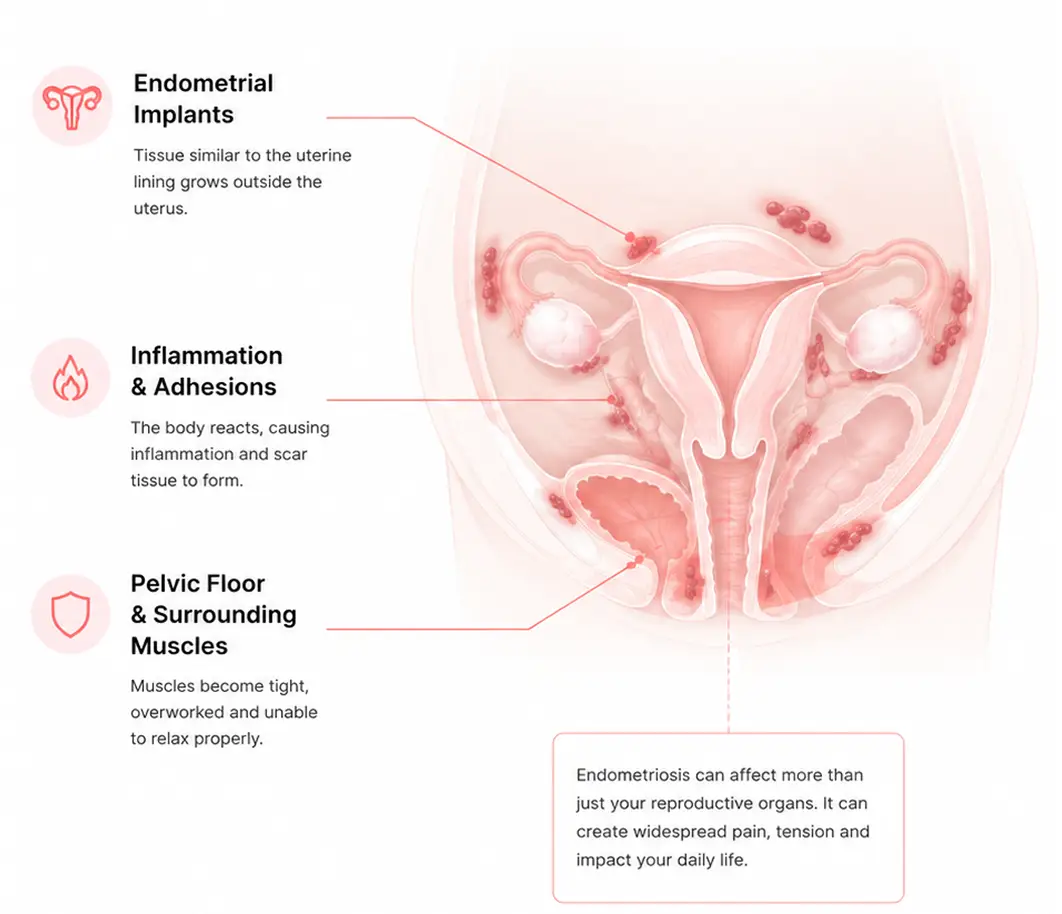
A gentle explanation of what’s happening inside your body.


Endometriosis is a medical condition where tissue similar to the uterine lining grows outside the uterus, causing chronic inflammation, pain, and internal adhesions. It is diagnosed and managed by your doctor. Physiotherapy doesn't treat the disease itself, but it can be a valuable part of managing the pain, muscle guarding, and pelvic tension that come with it.
The condition leads to chronic inflammation, deep muscle guarding, and adhesions, which over time leave the pelvic floor and surrounding muscles tight, painful, and protective.
Relying on pain medication or heat packs alone only masks the signals temporarily, without releasing the physical muscle tension underneath. That's where a physical approach, alongside your medical treatment, can help.
The method - 3 Steps


Gentle visceral mobilisation
Specialised manual therapy to ease the mobility of your pelvic tissues and loosen tight adhesions.


Pelvic floor
de-tensioning
Using EMG feedback to help your chronically guarded muscles learn to release, easing pain during periods and intimacy.


Nervous-system regulation
A personalised home plan with breathing and anti-inflammatory movement to help lower the frequency and intensity of flare-ups.
What to expect on your first visit


Calm, private conversation about your symptoms


Gentle assessment that complements your gynaecologist's care


A personalized plan moving entirely at your pace

We believe in realistic progress, guided by evidence and tailored to your body.


Endometriosis requires an ongoing approach. We provide a supportive space to help manage symptoms and ease pelvic tension at your pace.


Through a structured course of care, targeted therapy helps reduce persistent pain, muscle guarding, and flare-up severity.


We set clear, realistic expectations from the start—transparently explaining how physiotherapy supports your care alongside medical treatment.
Meet
Our women's
health physiotherapist
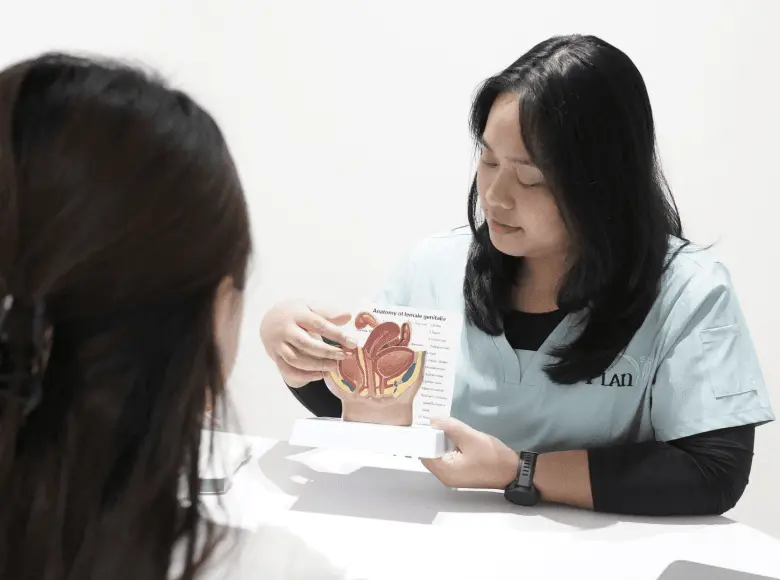
She specialises in pelvic dysfunction, incontinence, and women’s pelvic health.


Common questions. Honest answers.
Yes — pelvic floor physio can reduce muscle tension and pain patterns often linked to endometriosis and chronic period pain.
No, you can start physio for symptom management with or without a formal diagnosis.
Manual therapy, pelvic floor relaxation, stretching, and guidance on posture and movement to ease pain.
Yes — physio works well alongside medication, hormonal treatment, or surgery as part of a broader pain management plan.


Book an assessment to see how physiotherapy can complement your treatment.
No referral needed.