
Constipation & &Hypertonic Pelvic Floor in Petaling Jaya
Reclaim smooth, painless bowel movements without force or endless laxatives.Our gentle, data-driven pelvic floor rehabilitation helps retrain tight, uncoordinated muscles so you can pass stools easily and restore naturally healthy gut habits.
You know your body best. If any of these feel familiar, you’re in the right place.

Straining &
Incomplete Emptying
Sudden leaks when you cough, sneeze, laugh, or exercise (stress incontinence).
Pelvic Tightness
& Discomfort
A sudden, urgent need to go that you can't hold until you reach the toilet (urge incontinence).

Dependence
on Laxatives
Constantly mapping out the nearest toilet before you leave the house.
it’s a pelvic muscle problem
It is common, but you don’t have to live with it.
Pelvic floor-related constipation affects far more women than most realize, yet many suffer in silence or assume it’s just a lifelong digestive issue. It isn’t something you simply have to force through or accept. In most cases, your pelvic floor muscles can be retrained to release, relax, and give you back comfortable control.

More common than you think

Not a fiber or laxative failure

Targeted muscle relief is available

Smooth, natural relief is possible
A gentle explanation of what’s happening inside your body.
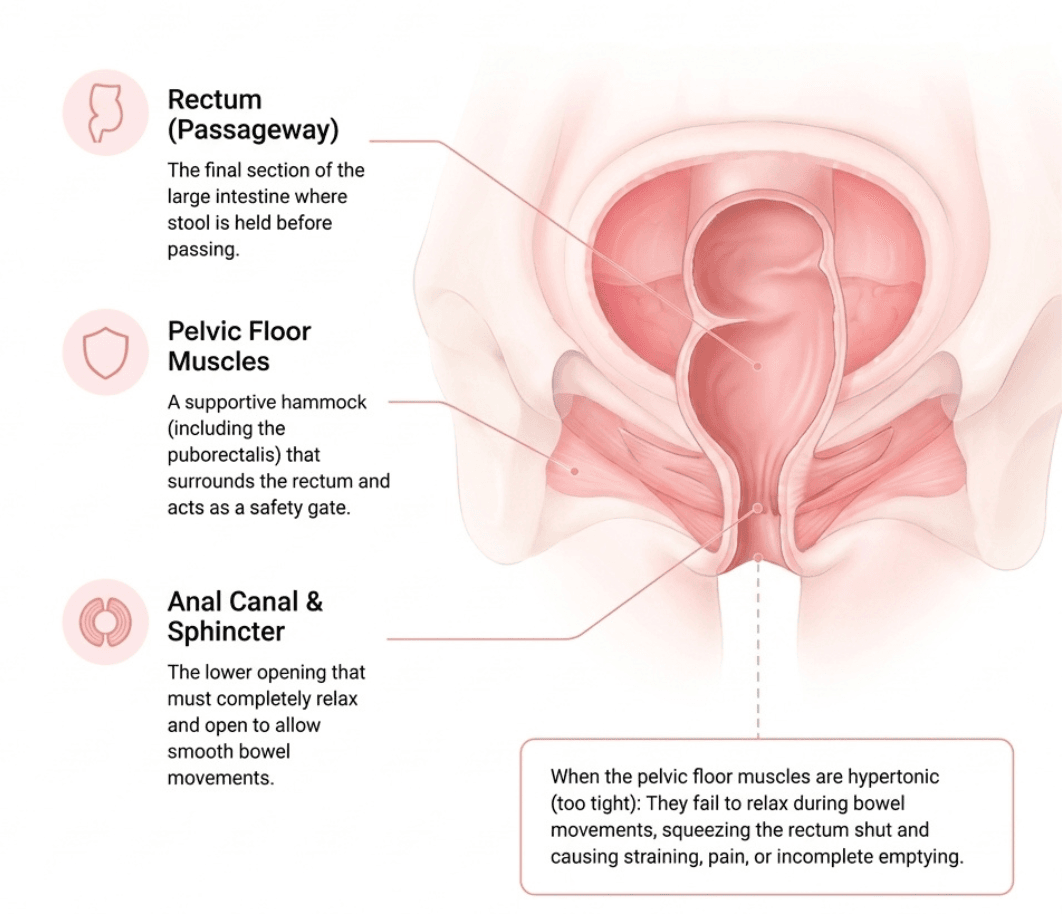
A hypertonic pelvic floor means your pelvic floor muscles are stuck in a tight, overworked, or spasmed state. Normally, when you bowel move, these muscles need to relax and lengthen. When they are hypertonic, they accidentally tighten or guard instead of relaxing (dyssynergic defecation), effectively "holding the door shut" while you try to push.
Chronic stress, holding in bowel movements, past strain/childbirth, habitual pushing, or intense core exercise without proper relaxation can cause pelvic floor muscles to become overly tense and uncoordinated over time.
Simply taking more fiber, drinking liters of water, or forcing yourself to push harder doesn't fix a muscle that physically refuses to relax. In fact, straining with a tight pelvic floor actually increases muscle tension and worsens the issue. Real relief requires teaching these tight muscles how to release.
The method - 3 Steps
EMG Biofeedback Relaxation Assessment
We use precise sensors to measure the baseline tension in your pelvic floor muscles. This helps you visually see how tight your muscles are and learn how to conscious “down-train” and release them.

Real-Time Ultrasound
& Guided Relaxation
Watch your pelvic floor muscles on screen as you practice proper diaphragmatic breathing and relaxation techniques. You’ll see the exact moment your pelvic floor successfully releases.

Toilet Posture, Breathing
& Manual Therapy
We combine gentle internal/external manual therapy (to release myofascial tightness) with practical training on optimal toilet posture (using the right angles) and pushing mechanics without straining.
What to expect on your first visit

Calm, private conversation

Gentle, pain-free assessment with visual muscle data

A personalized plan moving at your own pace
We believe in realistic progress, guided by evidence and tailored to your body.

Every body responds differently. We tailor your care to your specific needs and never rush your progress.

We measure muscle activity with EMG technology so you can see clear, quantifiable evidence of your improvement without guessing.

Combined with an easy home routine, we provide an honest, realistic timeline for your bladder control journey from the start.
Meet
Our women's
health physiotherapist
She specialises in pelvic dysfunction, incontinence, and women’s pelvic health.

Common questions. Honest answers.
Yes — physio directly addresses muscle coordination issues (like improper straining or deep muscle tension) that physically block you from fully emptying your bowels.
Often it’s the pelvic floor muscles not relaxing properly during bowel movements (hypertonicity), caused by chronic tension, stress, past straining, or habitual guarding.
Techniques like EMG biofeedback, myofascial muscle relaxation, guided pelvic down-training, manual therapy, and clear guidance on proper toilet posture and breathing mechanics.
We may suggest simple diet and hydration tips, but our core focus is on restoring normal pelvic floor muscle function and coordination to support smoother, easier bowel movements.
One assessment shows you exactly where you stand.
No referral, no pressure.