
Non-Invasive
Pelvic Organ
Prolapse Rehabilitation

in Petaling Jaya

Relieve that constant dragging heaviness and rebuild internal support. Clinical physiotherapy can help manage and improve early-to-moderate prolapse, gently and without surgery.

Does this
sound familiar?

You know your body best. If any of these feel familiar, you’re in the right place.

Heavy or pulling
pelvic sensation

A distinct, uncomfortable “heavy”, pulling, or dragging sensation low in your pelvic area.

Bulge or
slipping sensation

A feeling, or a small visible bulge, of something slipping down towards the vaginal opening.

Worsening
heaviness over time

Heaviness that gets noticeably worse by the end of the day or after standing for long hours.

If this is familiar,

you're not alone,

and for early-to-moderate prolapse, there’s a lot that can be done.

You're
not alone

Prolapse is far more common than most women realise, particularly after childbirth and around menopause. It’s rarely talked about, which leaves many women anxious and unsupported. For early-to-moderate prolapse, clinical physiotherapy can meaningfully relieve symptoms and improve support.

More common than you think

Not your fault, not something to be ashamed of

Effective treatment is available

Real change is possible

Understanding
Pelvic Organ Prolapse

A gentle explanation of what’s happening inside your body.

What is it?

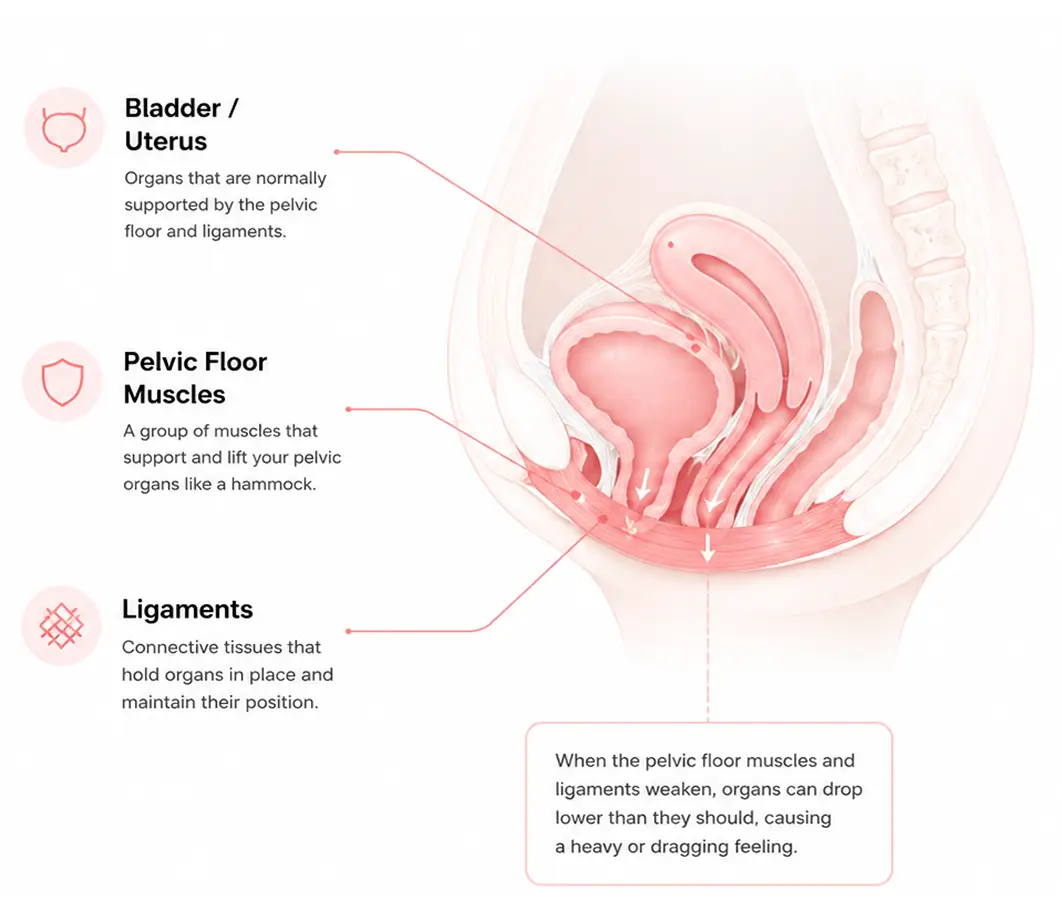
Pelvic organ prolapse is when the pelvic floor muscles and ligaments weaken, allowing an organ such as the bladder or uterus to drop lower than it should, creating a heavy or dragging feeling. For early-to-moderate prolapse, targeted physiotherapy can help relieve symptoms and rebuild support from the inside.

Why it happens?

Prolapse happens when the internal ligaments and pelvic floor muscles stretch and weaken, often after pregnancy and birth, so they no longer fully hold your organs in place.

Why the usual advice falls short?

This is why traditional belly binding can actually make things worse, wrapping the body tightly from the outside increases downward pressure on the very organs that are already dropping. Real recovery means rebuilding support and lift from the inside out.

How we help

The method - 3 Steps

01

Live ultrasound mapping

We assess the support levels of your pelvic floor under real-time imaging.

02

Safe pressure management

We teach you how to manage breathing and coughing so you stop unknowingly pushing your organs downward.

03

Structural
support rebuild

Through clinical Pilates and pelvic floor strengthening, we rebuild the muscular “trampoline” that supports your organs and relieves the heaviness.

What to expect on your first visit

Private, gentle, and unhurried assessment

Clear explanations in plain language with a tailored plan

Full control over every step of your care

What progress looks like

We believe in realistic progress, guided by evidence and tailored to your body.

Results depend on your stage and consistency

Progress varies based on your prolapse stage and commitment. We guide you through a tailored approach at your own speed.

Meaningful relief through structured care

A combination of targeted sessions and home practice helps reduce heaviness and restore everyday comfort.

Honest guidance and clear next steps

If physiotherapy isn't the best fit for your stage, we will be completely honest and help direct you to the right alternative.

Meet

Alexis Lee

Our women's
health physiotherapist

She specialises in pelvic dysfunction, incontinence, and women’s pelvic health.

B.Phy (Hons)

APAM Registered

MMC Registered

Your questions, answered

Common questions. Honest answers.

After years of avoiding intimacy, I finally understood what was happening.
- Sarah
After years of avoiding intimacy, I finally understood what was happening.
- Sarah
01 | Can physio help without surgery?

Yes, for many mild to moderate cases — pelvic floor strengthening and lifestyle adjustments can reduce symptoms and support the pelvic organs.

Yes, with the right guidance — we’ll help you avoid movements that increase pressure and build strength safely instead.

Not necessarily — with the right management, many people maintain or improve their symptoms rather than worsening.

Surgery may be considered if symptoms are severe, significantly affect daily life, or haven’t improved with physio and lifestyle changes — we can help guide you on whether it’s the right next step.

Relief
Is Possible

Start with an assessment to understand your stage and your options.
No referral, no pressure.

60-min Assessment

Private & Confidential

No Referral Needed